

Conditions: Squamous Cell Carcinoma of the Skin
Sun or other ultraviolet light exposure is the most important risk factor for skin cancers, but fair skin, family history of skin cancers, a personal history of other skin cancers, and a weakened immune system (such as from an organ transplant or immune-suppressing medications), also increase one's chances of developing a new skin cancer. Non-cancerous lesions of the skin are discussed elsewhere.
squamous cell carcinoma
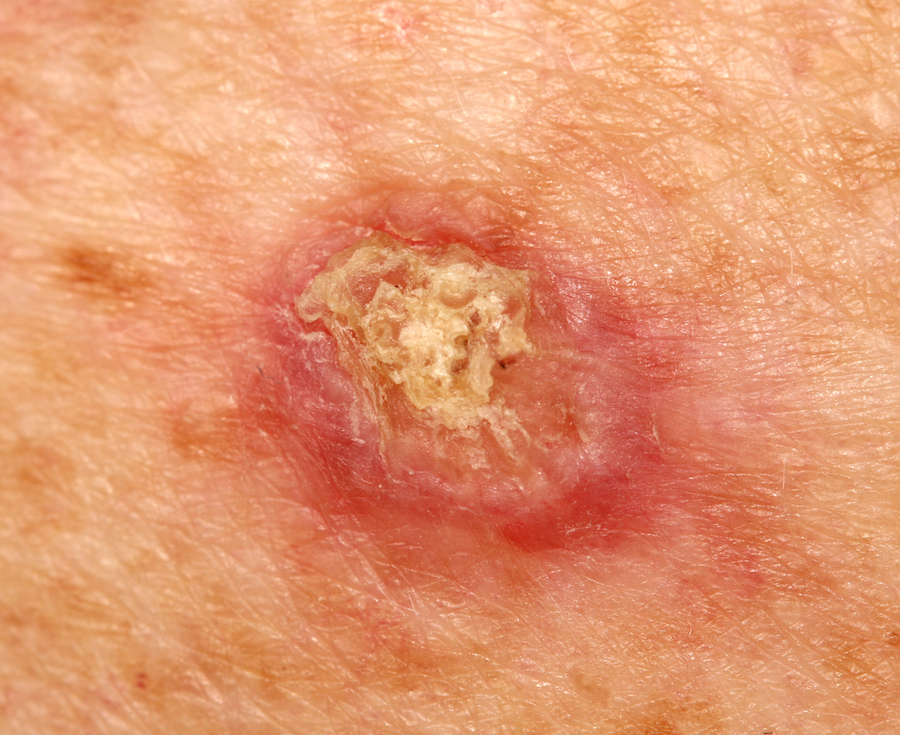

Squamous cell skin cancer, also known as cutaneous squamous-cell carcinoma, is the second most common type of skin cancer, after basal cell carcinoma. It usually presents as a hard lump with a scaly top but can also form an ulcer, slowly growing over months. It is usually painless, though some tumors bleed, itch, or become tender. Squamous cell carcinoma has the potential to grow into surrounding tissues, spread (metastasize) to nearby lymph nodes, or travel along nerves (called perineural spread), though these events are uncommon when the cancer is identified and treated early.


This page