

Conditions: Auricular Hematoma and Cauliflower Ear
This page describes auricular hematoma and the potential result, cauliflower ear.

What is an auricular hematoma?
An auricular hematoma is a collection of blood that forms beneath the perichondrium of the ear's pinna (external ear), typically resulting from blunt or shearing trauma to the auricle. It is most commonly seen in contact sports such as wrestling, boxing, and martial arts, including judo.
The diagnosis is clinical. The affected ear presents with a fluid-filled, tender swelling over the cartilaginous portion of the auricle, typically appearing shortly after trauma. The earlobe is spared, as it lacks cartilage.
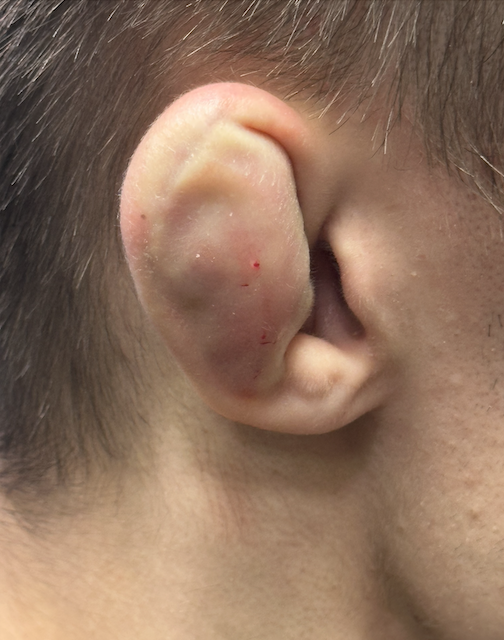
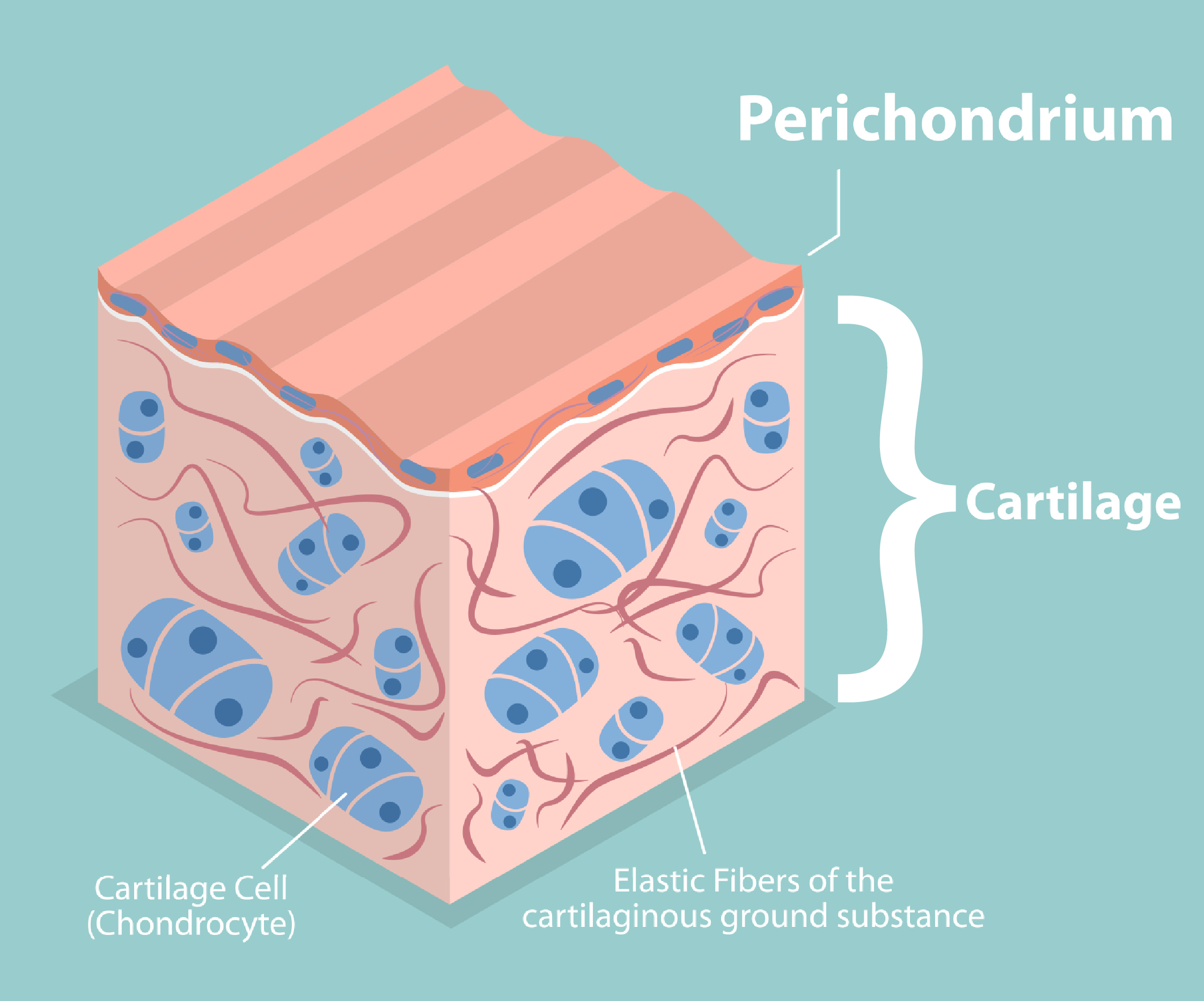
What is the anatomy and physiology of an auricular hematoma?
The trauma separates the perichondrium from the underlying auricular cartilage, and blood accumulates as a hematoma in this subperichondrial space. Cartilage has no blood vessels running through it and depends entirely on oxygen and nutrients diffusing from the perichondrium into the cartilage. A hematoma separating the perichondrium from the cartilage prevents oxygen and nutrients from diffusing into the cartilage. Without treatment, this leads to cartilage death and subsequent scar and new but misshapen cartilage deposition, producing the characteristic permanent deformity known as cauliflower ear (or "wrestler's ear").
How is an auricular hematoma managed?
Prompt drainage followed by a pressure dressing is the usual treatment, as described on the auricular hematoma treatments page.
Note: Delayed or untreated hematomas (beyond ~1 month) generally do not respond to attempts at drainage, as the process has progressed to cauliflower ear.

What is a cauliflower ear?
Cauliflower ear (also called wrestler's ear) is an acquired deformity of the external ear (auricle) caused by one or more auricular hematomas. The hematoma disrupts the perichondrial blood supply to the cartilage. Brief disruption of this blood supply may be tolerated with little or no consequence, but longer disruption without treatment (on the order of days to weeks) leads to loss of cartilage, followed by fibrosis and some new (but misshapen) cartilage formation. This produces the characteristic thickened, irregular, bulbous appearance resembling a cauliflower.
In addition to the permanent cosmetic deformity, functional complications of cauliflower ear include hearing loss, cerumen (ear wax) accumulation due to narrowing of the ear canal, and external ear infections.
How is cauliflower ear treated?
Prevention, and the limited options once a cauliflower ear has formed, are described on the auricular hematoma treatments page.

This page