

Conditions: Inflammation
Inflammation is the body's protective response to injury, infection, and irritation, and it underlies many conditions of the ears, nose, throat, and neck.
What is inflammation?
Inflammation is the body's natural response to something harmful, such as an infection, an injury, an irritant, or an abnormal immune reaction. It is a protective process that helps the body fight germs, clear away damaged tissue, and begin healing. When it works well and then switches off, inflammation is beneficial. Problems arise when inflammation is too intense, occurs in the wrong place, or fails to shut down. Chronic inflammation is linked to autoimmune diseases, heart disease, and other health problems.
In the ear, nose, throat, and head and neck region, inflammation is extremely common because these areas are the body's front line against inhaled air, food, and germs. Sinus infections, sore throats, ear infections, swollen lymph nodes, and inflamed tonsils are all everyday examples. In clinical practice, healthcare providers assess inflammation to understand underlying health issues, diagnose conditions, and monitor responses to treatment.
The classic signs of inflammation
Physicians have recognized the same core signs of inflammation for nearly two thousand years:
Redness, from increased blood flow to the area
Heat, also from increased blood flow
Swelling, from fluid leaking into the tissue
Pain, from chemicals that irritate nerve endings and from pressure
Loss of function, such as a stuffy nose, a hoarse voice, or difficulty swallowing
In the head and neck, these signs appear as a red and painful throat, a swollen and tender lymph node under the jaw, a blocked and aching sinus, or a muffled, painful ear.
Acute versus chronic inflammation
Acute inflammation comes on quickly, is usually intense, and typically resolves within days to a couple of weeks. A strep throat, an ear infection, or a swollen lymph node after a cold are typical examples. The body ramps up its response, deals with the problem, and then actively turns inflammation off and repairs the tissue.
Chronic inflammation is prolonged, lower grade, and often quieter. It occurs when the trigger persists (such as a persistent infection or irritant), when the immune system mistakenly attacks the body's own tissue, or when the normal shut-off process fails. It can smolder for months or years and slowly damage tissue, sometimes leaving scar tissue (fibrosis). Chronic sinusitis, chronic tonsillitis, and autoimmune thyroid disease are examples relevant to this region. Unlike acute inflammation, chronic inflammation may cause few obvious signs and can go unnoticed for a long time.
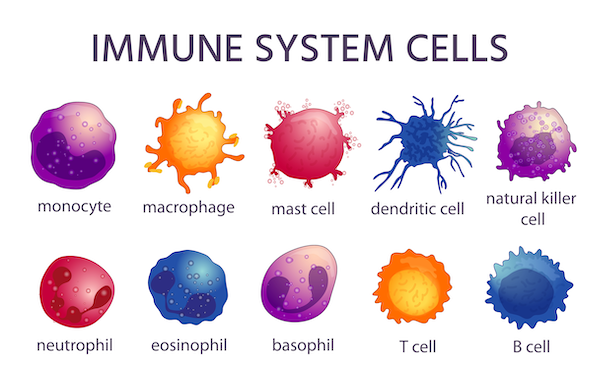
Immune system (inflammatory) cells
Inflammation is carried out by a coordinated team of immune cells, each with a distinct role:
Macrophages are large first-responder and clean-up cells. They detect danger, release signaling molecules called cytokines that recruit other immune cells, engulf germs and debris, and help both start and later resolve inflammation. They are also central to chronic inflammation and to the formation of granulomas.
Neutrophils are the most abundant rapid responders in acute inflammation. They swarm to infected or injured tissue, destroy bacteria, and are a major component of pus.
Lymphocytes, including T cells and B cells, provide targeted immunity. T cells (particularly CD4+ helper T cells) coordinate the response, and B cells mature into cells that produce antibodies. Lymphocytes dominate prolonged and immune-driven inflammation, including autoimmune conditions.
Eosinophils are involved in allergic reactions and defense against parasites. They are prominent in allergic conditions of the nose and sinuses, some forms of chronic sinusitis, and asthma.
Mast cells are tissue sentinels that release histamine and other chemicals, driving the immediate symptoms of allergy: sneezing, itching, swelling, and a runny nose.
Dendritic cells capture pieces of germs and travel to lymph nodes to activate lymphocytes, linking the rapid and the targeted parts of the immune system.
Inflammatory signaling molecules
Immune cells communicate using chemical signals. Cytokines, such as tumor necrosis factor (TNF), interleukin-1 (IL-1), and interleukin-6 (IL-6), amplify and coordinate the response. Chemokines act like a scent trail that draws additional immune cells to the site. Prostaglandins and leukotrienes cause blood vessels to widen and leak, producing redness, warmth, and swelling, and they contribute to pain and fever. When these signals reach the bloodstream, they can cause whole-body effects such as fever, fatigue, and loss of appetite, and they prompt the liver to make acute-phase proteins such as C-reactive protein, the basis of some of the blood tests described below.

Inflammation in lymph nodes (lymphadenitis)
Lymph nodes are small filtering stations distributed throughout the neck. When they detect infection or inflammation nearby, they become enlarged and tender, a condition called lymphadenitis. This response typically indicates that the immune system is actively fighting an infection. Swollen neck nodes commonly accompany sore throats, ear infections, dental infections, and colds, and usually shrink once the trigger clears. Common causes include bacterial and viral infections, such as strep throat and mononucleosis, and symptoms may include swelling, pain, fever, and fatigue.
In some cases, lymphadenitis resolves on its own, while more severe cases require treatment of the underlying cause. Nodes that remain enlarged, hard, fixed, or painless are features that clinicians regard as warranting further evaluation, because they can occasionally signal other conditions. Additional information is available on the lymph node and neck mass pages.
Inflammation of the ears, nose, sinuses, and throat
Ears: Inflammation of the outer ear canal (otitis externa, or swimmer's ear) or of the middle ear (otitis media) causes pain, redness, drainage, and reduced hearing.
Nose and sinuses: Rhinitis (inflammation of the nasal lining) and sinusitis (inflammation of the sinuses) cause congestion, discharge, facial pressure, and reduced sense of smell. They may be triggered by infection, allergy, or irritants and can become chronic. Long-standing inflammation can also contribute to nasal polyps.
Throat: Pharyngitis (sore throat) and tonsillitis are common inflammatory conditions caused by viruses or bacteria, producing pain, difficulty swallowing, and sometimes fever. Inflammation of the voice box (laryngitis) causes hoarseness.
Inflammation of the salivary glands and thyroid
Salivary glands: The parotid glands (in front of the ears) and the submandibular glands (under the jaw) can become inflamed from infection, blockage by stones, or immune conditions, causing painful swelling, especially around mealtimes. Additional information is available on the salivary gland conditions page.
Thyroid: Inflammation of the thyroid gland (thyroiditis) can cause neck tenderness and can either raise or lower thyroid hormone levels, with effects throughout the body. Forms include acute thyroiditis, subacute thyroiditis, Hashimoto's thyroiditis, and Riedel's thyroiditis. Some forms are autoimmune (see below).
Inflammation in the blood
Inflammatory cells in the blood, particularly white blood cells (WBCs), play a crucial role in identifying and tracking infections. A complete blood count (CBC) with differential measures the WBC count and the proportion of each cell type, aiding in the determination of infection presence and severity over time. An elevated WBC count may indicate infection, while the specific types of white blood cells can suggest the nature of the cause.
The profile (differential) of immune cells can provide insight into the underlying process:
Bacterial infections: neutrophils are often significantly elevated, reflecting their role in the initial response to invading bacteria.
Viral infections: lymphocytes, particularly T cells and natural killer (NK) cells, typically increase. These cells recognize and eliminate virus-infected cells.
Parasitic infections: infections with parasites such as helminths (worms) generally increase eosinophils and activated T helper type 2 (Th2) cells.
Allergic reactions: mast cells, basophils, and eosinophils are often elevated, contributing to hypersensitivity responses to allergens (see allergy testing).
Each pattern reflects the body's tailored response to specific threats, and interpretation of the differential can be useful in identifying the cause of inflammation. Interpretation requires care, however. White blood cell levels also rise with physiological stressors such as surgery or trauma, and corticosteroids can raise the WBC count while impairing the movement of white blood cells to the site of infection, which can lead to a misinterpretation of an infection's severity.
How inflammation is evaluated
Clinicians assess inflammation using a combination of approaches:
Physical examination: looking and feeling for redness, swelling, warmth, tenderness, enlarged lymph nodes, and changes in function. In the head and neck, this includes examining the ears, nose, mouth, throat, thyroid, and neck, sometimes with a small scope.
C-reactive protein (CRP): a protein made by the liver that rises quickly with inflammation. It is a useful, though nonspecific, marker of how much inflammation is present.
Erythrocyte sedimentation rate (ESR): an older, indirect measure of inflammation that is sensitive but less specific and can be affected by age, sex, anemia, and pregnancy.
Additional blood tests: such as thyroid antibodies, IgG4 levels, or ANCA antibodies, may be used to look for specific diseases.
Imaging: CT, MRI, and ultrasound show the extent of inflammation in the sinuses, salivary glands, thyroid, eye sockets (orbits), lymph nodes, and deep neck spaces, and can reveal fluid, masses, or bone involvement.
Biopsy: a small tissue sample examined under the microscope (see incisional biopsy, needle biopsy, and pathology diagnosis) is often the only way to make a definitive diagnosis, distinguish inflammation from cancer, and identify specific diseases such as granulomatous or IgG4-related conditions.
CRP and ESR indicate that inflammation is present and roughly how active it is, but they do not identify the cause. Normal values do not always exclude disease, and mild elevations can occur in otherwise healthy older adults.
Autoimmune and granulomatous inflammatory diseases
Sometimes the immune system attacks the body's own tissue (autoimmune disease) or forms tight clusters of immune cells called granulomas (granulomatous disease). Several such conditions prominently involve the head and neck:
Graves disease: thyroid inflammation driven by antibodies that stimulate the gland to make excessive hormone (hyperthyroidism). It can also cause swelling and bulging of the eyes.
Hashimoto's thyroiditis: chronic inflammation that gradually damages the thyroid, often resulting in an underactive thyroid (hypothyroidism) and a firm, enlarged gland.
Sjögren's disease: inflammation of the moisture-producing (exocrine) glands, causing dry eyes and dry mouth and sometimes swelling of the salivary glands.
Sarcoidosis: a granulomatous disease of unknown cause that can affect many organs, most commonly the lungs. In the head and neck, it can involve lymph nodes, salivary glands, sinuses, and eyes.
Granulomatosis with polyangiitis (formerly Wegener's granulomatosis): inflammation of blood vessels with granuloma formation, frequently affecting the sinuses, nose (sometimes damaging its structure), ears, and airway, as well as the lungs and kidneys.
IgG4-related disease: a condition marked by immune cells and scarring that can enlarge the salivary glands, tear glands, orbits, thyroid, sinuses, and lymph nodes, often mimicking cancer. It typically responds dramatically to corticosteroids.
Diagnosis often requires a combination of examination, specialized blood tests, imaging, and biopsy, because these conditions can look alike and can resemble infection or cancer.
How corticosteroids affect inflammation and laboratory results
Corticosteroids (such as prednisone) are among the most powerful anti-inflammatory medications. They broadly quiet the immune system by reducing the production of inflammatory signaling molecules, decreasing the widening and leakage of blood vessels, and calming immune cell activity. As a result, they can rapidly reduce swelling and inflammation in many head and neck conditions. Corticosteroids also change laboratory results:
They can lower inflammation markers such as CRP and ESR, which may mask how active a disease truly is.
They shift the white blood cell count, often raising the total count and the number of neutrophils while lowering lymphocytes and eosinophils.
Because they can dramatically shrink inflamed tissue (for example, in IgG4-related disease), starting steroids before a biopsy can obscure the diagnosis. For this reason, clinicians may seek tissue or key blood tests before treatment begins.
Long-term corticosteroid use carries its own risks and is managed by a physician.
General approaches to treating inflammation
Treatment depends on the cause. General strategies include:
Treating the trigger: antibiotics for a bacterial infection, removal of an irritant or allergen, or drainage of a blocked sinus or gland.
Reducing symptoms and swelling: anti-inflammatory medications such as ibuprofen or naproxen, corticosteroids in appropriate situations, saline rinses, warm compresses, rest, and hydration.
Managing allergy-driven inflammation: antihistamines, steroid nasal sprays, and allergen avoidance.
Treating autoimmune and granulomatous disease: medications that regulate or suppress the immune system, usually managed by specialists.
Supporting the body's natural resolution: adequate rest, good nutrition, avoidance of tobacco, and management of conditions such as obesity and diabetes that can promote ongoing inflammation.
Surgery: sometimes used to drain an abscess, remove chronically inflamed tissue (such as tonsils), or obtain a biopsy. Treatment options for specific conditions are described in the Treatments section of this website.
Potential complications of chronic inflammation
When inflammation does not resolve, it can cause lasting harm:
Tissue damage and scarring (fibrosis): persistent inflammation can permanently alter the sinuses, salivary glands, thyroid, or airway.
Loss of function: ongoing damage can impair the sense of smell, hearing, voice, swallowing, or thyroid hormone production.
Spread of infection: untreated inflammation and infection in the ear, sinus, or throat can extend into nearby structures, including the eye, bone, or the space around the brain.
Whole-body effects: long-standing inflammation anywhere in the body is linked to an increased risk of conditions such as heart disease and contributes to the effects of aging.
Masking of serious disease: chronic swelling can resemble, or coexist with, head and neck cancer, which is why persistent or unexplained inflammation is typically evaluated by a clinician.
Features that can indicate a more serious problem
Clinicians generally regard the following as signs of more serious inflammation or of another underlying condition: a lump or swelling that does not go away, difficulty breathing or swallowing, a high or persistent fever, severe pain, vision changes, or a neck mass that is hard, fixed, or growing. Identifying the cause early allows treatment to be directed before complications develop.

This page