

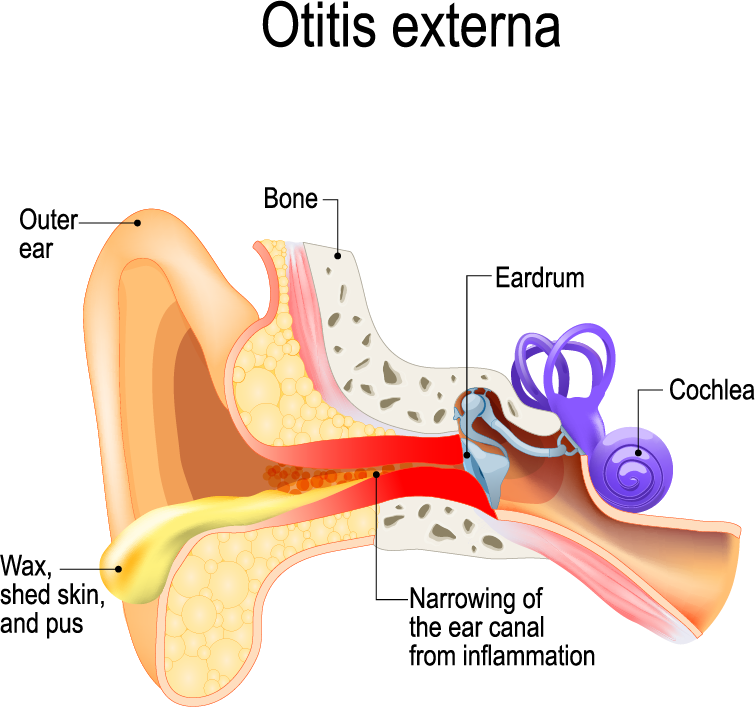
Treatments: Otitis Externa
An overview of the treatments commonly used for otitis externa (swimmer's ear), with medicated ear drops as the central approach.
How is otitis externa treated?
Otitis externa is treated with medication directed at the infection and inflammation of the ear canal, along with steps that help the medication reach the affected skin. The specific approach varies with how severe the problem is, whether the eardrum is intact, and a person's overall health. This page describes treatments only. Information about the condition itself is on the otitis externa conditions page, and a broader overview of ear infection care is on the treatments for an ear infection page.
Ear drops: the main treatment
For most uncomplicated cases, medicated ear drops placed directly into the ear canal are the main treatment. Drops deliver a very high concentration of medicine right where it is needed, far higher than a pill could reach in that area, while limiting effects on the rest of the body. Several types are used:
Antibiotic drops. These target the bacteria commonly involved (such as Pseudomonas and Staphylococcus). Common examples include ciprofloxacin, ofloxacin, gentamicin, and neomycin/polymyxin B combinations.
Antibiotic-steroid combination drops. These add a corticosteroid (such as dexamethasone, hydrocortisone, or fluocinolone) to the antibiotic. The steroid reduces swelling, redness, and drainage and can help symptoms clear more quickly.
Antifungal drops. When a fungal infection (fungal otitis externa, also called otomycosis) is present, antifungal preparations are used instead of, or in addition to, antibacterial drops.
Acidifying drops. Solutions such as acetic acid (sometimes combined with hydrocortisone) make the canal more acidic, which discourages the growth of bacteria and fungi. These are often used for milder or early disease and for prevention.
No single drop has been shown to be clearly better than the others for most people. The choice depends on factors such as the state of the eardrum, cost, and the chance of a skin reaction to the medicine. When the eardrum has a hole (perforation) or a ventilation tube is in place, a non-ototoxic preparation is typically chosen, because some drops (particularly aminoglycosides such as neomycin and gentamicin) can harm hearing if they reach the middle ear. Fluoroquinolone drops such as ciprofloxacin and ofloxacin are considered safe in that situation.
How ear drops are used
Getting the medicine to the infected skin matters as much as the medicine itself. Typical instructions include:
Warming the bottle in the hand for a short time before use, and shaking suspensions well.
Lying with the affected ear facing up, filling the canal with the prescribed number of drops, and staying in that position for about a minute so the medicine can travel down the canal.
Gently pumping the small flap of cartilage in front of the ear (the tragus) or moving the earlobe to help the drops reach deeper.
Completing the full prescribed course, which is often about a week.
Having another person place the drops can make it easier to fill the canal completely.
Cleaning the ear canal (aural toilet)
When the canal is full of debris, wax, or discharge, drops cannot reach the infected skin. A clinician may clean the canal, often under a microscope for a clear, magnified view, using gentle suction or dry wiping. This cleaning, sometimes called aural toilet or debridement, improves how well the drops work and is often repeated at follow-up visits. In people with diabetes or a weakened immune system, forceful irrigation (flushing with water) is generally avoided.
Wick placement for a swollen canal
If the canal is so swollen that it is nearly closed, drops cannot get past the swelling. In this situation a clinician may insert a small wick, a compressed sponge or ribbon of cotton, into the canal. The wick draws the medicine along its length to the deeper, blocked portion of the canal, and the drops are applied onto the wick to keep it moist. As the swelling goes down, the wick is removed (often after a day or two) or falls out on its own, and drops are then continued without it.
When does the pain of otitis externa improve?
Otitis externa can be quite painful, so pain relief is an important part of treatment. Pain is usually managed with over-the-counter medicines such as ibuprofen or acetaminophen (Tylenol), with stronger pain medicine reserved for severe cases. Generally, it takes about three days of effective antimicrobial treatment (antibacterial or antifungal) before the infection and inflammation reduce enough for pain to lessen. Many people notice meaningful relief within 48 to 72 hours, and full recovery usually takes several days to about a week. When pain is worsening rather than improving after the first few days, clinicians commonly reassess the situation.
When oral or intravenous antibiotics are used
Ear drops, rather than pills, are the standard treatment for ordinary swimmer's ear. Oral antibiotics are generally avoided in uncomplicated cases because they add side effects and encourage antibiotic resistance without improving results. Systemic medications, those that circulate through the bloodstream and are taken by mouth, given through a vein (intravenously), or injected into muscle, are reserved for specific situations, such as:
The infection has spread beyond the ear canal, into the outer ear, the skin of the face or neck, or deeper tissues.
Other factors impair healing, such as poorly controlled diabetes or a weakened immune system.
There is concern for a severe, invasive infection (necrotizing otitis externa, described below).
When systemic antibiotics are used, they are chosen to cover the usual bacteria, including Pseudomonas.
Diabetes or a weakened immune system
People with diabetes, HIV/AIDS, or other causes of a weakened immune system, and those who have had radiation therapy to the area, are more likely to be treated with antibiotics by mouth or vein in addition to drops, and to need antifungal treatment. Careful control of blood sugar is an important part of treatment in people with diabetes. As noted above, aggressive irrigation of the canal is generally avoided in these individuals.
Keeping the ear dry during treatment
Keeping the ear canal dry supports healing. Common measures include keeping water out of the ear while bathing or showering and avoiding swimming until the infection has resolved. Cotton swabs and other objects are kept out of the ear, because they can scratch the skin, push in debris, and worsen the infection. Scratching or cleaning inside the canal is avoided.
Hearing aids and earbuds during treatment
Objects that sit in the ear canal, including hearing aids and in-ear earbuds, trap moisture, apply pressure, and can irritate already inflamed skin. During an active infection, their use is often paused or limited until the canal has healed, particularly while the canal is swollen or draining. When a hearing aid is medically necessary, a clinician can provide guidance on minimizing its time in the ear.
When treatment does not work as expected
Most cases respond to appropriate treatment, and referral to a specialist is uncommon. When symptoms have not improved within about 48 to 72 hours, the situation is generally reassessed. Factors that can limit response include:
The medicine is not reaching the infection, for example because the canal is blocked and needs cleaning or a wick.
Fungal infection, which can develop after antibacterial drops have altered the normal balance in the canal and is treated with antifungal medicine.
Allergy to the drops. Some people develop an allergic skin reaction (contact dermatitis) to an ingredient in the drops, especially with prolonged use, causing continued redness, itching, swelling, and drainage that can be mistaken for ongoing infection. Neomycin-containing drops are a well-known cause, and the drops are typically changed in this situation.
Another condition may be responsible, in which case the original diagnosis is revisited.
At reassessment, a clinician may take a culture (a swab of the canal) to identify fungi, resistant bacteria, or unusual organisms so that treatment can be targeted, and the ear is re-examined. Persistent, severe pain, especially with granulation tissue in the canal, prompts evaluation for necrotizing otitis externa (described below) or, rarely, other serious conditions of the ear canal.
Treatment of chronic otitis externa
Chronic otitis externa refers to long-lasting or repeatedly recurring inflammation of the ear canal, often lasting more than a few weeks. Treatment centers on identifying and managing any underlying skin or allergic condition, such as eczema, psoriasis, seborrheic dermatitis, or allergy. It often includes steroid-containing preparations to calm inflammation, regular gentle cleaning of the canal, and measures to keep the ear dry.
Treatment of necrotizing (malignant) otitis externa
Necrotizing otitis externa, also called malignant otitis externa, is an aggressive, potentially life-threatening infection that spreads from the ear canal into the surrounding bone of the skull base. It is treated far more intensively than ordinary swimmer's ear:
Prolonged antibiotics. Long courses of antipseudomonal antibiotics, typically 6 to 8 weeks as for a bone infection (osteomyelitis), are the mainstay. Ciprofloxacin is a central agent. Oral quinolones have allowed many people to be treated without prolonged hospitalization, though more severe cases receive intravenous antibiotics, sometimes in combination. Antibiotic choice is guided by cultures.
Antifungal medicines are added when a fungal cause is suspected or confirmed.
Careful control of blood sugar in people with diabetes.
Surgery is used in selected cases, for biopsy, to obtain cultures, and to remove dead or infected tissue (debridement, sometimes mastoidectomy).
Hyperbaric oxygen therapy is used at some centers as an add-on treatment in difficult cases.
Close follow-up, repeat imaging (such as CT or MRI), and monitoring of nerve function and inflammation blood tests are part of care, because treatment is long and the infection can be serious.
Reducing the chance of recurrence after recovery
After the infection clears, several measures are commonly used to lower the risk of recurrence. These focus on keeping the canal dry, avoiding trauma, and limiting irritation:
Drying the ears thoroughly after swimming or bathing, for example by tilting the head to let water drain and using a hair dryer on a low, cool setting held at a distance.
Keeping water out of the ears during swimming with well-fitting earplugs or a swim cap.
Avoiding cotton swabs and not inserting objects to clean inside the canal.
Using acidifying or drying drops (such as dilute acetic acid or alcohol-based preparations) after water exposure in people prone to recurrent infections.
Avoiding materials that irritate the canal or cause allergic reactions.

This page