
Treatments: Vocal Cord Weakness (Paresis) or Paralysis
Vocal cord paresis is weakness, and paralysis is absent movement, of one or both vocal cords, which can affect the voice, swallowing, and breathing.
Treatment options range from observation and therapy to injection, surgery, and airway procedures, depending on the cause and the functions affected.
This page describes treatment options for vocal cord paresis (weakness) and paralysis, including observation, therapy, injection, surgery, and airway procedures. The voice conditions page and the voice box treatments page provide broader context. The condition itself, including its symptoms, causes, and diagnosis, is described on the laryngeal nerve dysfunction (vocal cord weakness or paralysis) page.
What Vocal Cord Paresis and Paralysis Are
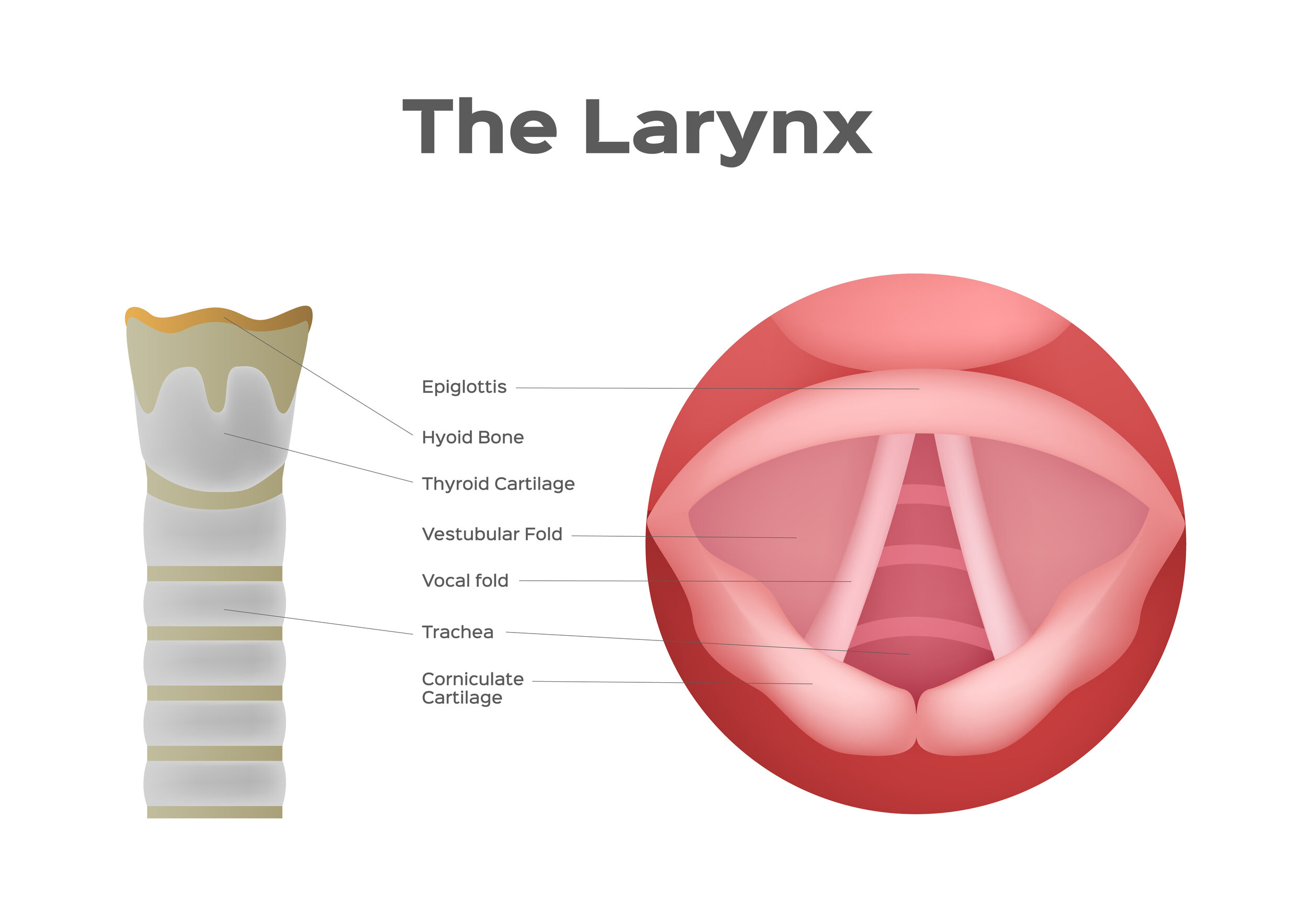
The vocal cords (also called vocal folds) are two bands of tissue in the voice box (larynx) that open for breathing and close for speaking, coughing, and swallowing. Their movement is controlled by nerves, mainly the recurrent laryngeal nerve, a branch of the vagus nerve.
Vocal cord paresis means a vocal cord is weak and moves less than normal.
Vocal cord paralysis means a vocal cord does not move at all.
Either problem can affect one side (unilateral) or both sides (bilateral), and can be temporary or permanent.
Common Causes
Vocal cord movement problems usually come from injury to or pressure on the nerve somewhere along its path from the brain to the voice box. Common causes include:
Surgery near the nerve, such as thyroid, neck, chest (heart, lung, or esophagus), or spine surgery. This is the most common cause. The left side is affected more often because that nerve takes a longer path through the chest.
Breathing tubes used during anesthesia or prolonged hospitalization, or pressure from a large tube.
Tumors of the neck, chest, or skull base that press on or invade the nerve.
Nervous system conditions, such as stroke, multiple sclerosis, or brain and brainstem disease.
Infections, inflammation, or external injury to the neck.
Unknown cause (idiopathic), sometimes after a viral illness.
How Voice, Breathing, and Swallowing Can Be Affected
The effects depend on whether one or both cords are involved and where along the nerve the problem lies.
One side (unilateral):
Voice: often weak, breathy, rough, or low-pitched, with vocal fatigue, because the cords cannot close fully.
Swallowing: food or liquid may go the wrong way (aspiration), causing coughing or choking, and in some cases raising the risk of pneumonia. See also swallowing difficulty (dysphagia).
Cough and energy: the cough may be weak, and some people feel short of breath or tire easily when talking.
Both sides (bilateral):
Breathing: when both cords sit close to the midline, the airway is narrowed. This can cause noisy breathing (stridor) and shortness of breath, which may become an emergency, especially during a chest infection.
Voice: the voice may be surprisingly close to normal because the cords are near each other.

Goals of Treatment
Treatment is tailored to which functions are affected. The main goals are to:
Restore a stronger, clearer voice.
Make swallowing safer and reduce the risk of food or liquid entering the airway.
Ensure a safe airway for breathing (the top priority in bilateral paralysis).
Improve cough and overall quality of life.
Restoring voice and restoring the airway can pull in opposite directions. Bringing the cords together helps the voice but can narrow the airway, while opening the airway can weaken the voice. Treatment tries to find the best balance for each situation.
Observation and Expected Recovery
Many cases improve on their own, particularly when the nerve is bruised rather than cut, so an initial period of watchful waiting is common. Nerve recovery, or compensation by the other cord, can take time.
Observation for about 6 to 12 months is a common approach before any permanent surgery is considered, since spontaneous recovery may occur within weeks to several months.
For idiopathic (unknown-cause) cases, a large share recover within about a year.
Recovery is not expected when the nerve is known to have been cut, or when specialized nerve testing shows a poor outlook. In those situations, treatment may be considered sooner.
Earlier treatment may also be considered when swallowing is unsafe, when the voice problem is severely disabling, or when a person cannot tolerate the voice change.
Evaluation typically includes examining the voice box with a small flexible camera, and imaging such as a CT scan is often used to look for a cause along the nerve. A nerve test of the voice box muscles (laryngeal electromyography) can sometimes help estimate the chance of recovery.
Voice Therapy and Swallowing Therapy
Speech-language pathologists are central to care, and voice and swallowing therapy are commonly the first treatments used.
Voice therapy teaches techniques to use the voice more efficiently and to help the healthy cord compensate. It can be used alone or alongside procedures.
Swallowing therapy teaches strategies and exercises to swallow more safely and lower the risk of aspiration. Swallow evaluations help identify which strategies apply.
Therapy may be enough for milder problems and supports recovery in others.

Injection Laryngoplasty
In this procedure, a filler material is injected into or beside the paralyzed cord to plump it up and move it toward the midline, so the healthy cord can meet it. This improves closure, which helps the voice, swallowing, and cough.
It is less invasive than open surgery and can often be done in the office while awake, using local anesthesia, or in the operating room. When the person is awake, the voice can be checked during the injection.
Temporary materials (such as certain gels) last weeks to months and then are absorbed by the body. These are useful when recovery is still possible or as a trial before a longer-lasting approach.
Longer-lasting materials (such as calcium-based fillers or the person's own fat) can last many months. Injection is generally less suited to very large gaps at the back of the voice box.

Medialization Thyroplasty and Arytenoid Adduction
When a longer-lasting result is needed, laryngeal framework surgery repositions the paralyzed cord through the cartilage of the voice box.
Medialization thyroplasty involves making a small window in the voice-box cartilage and placing an implant that pushes the paralyzed cord toward the midline. It is usually done in the operating room, often with the person awake enough to allow fine-tuning of the voice.
Arytenoid adduction rotates and repositions a small cartilage at the back of the voice box. It is sometimes added to thyroplasty when there is a large gap toward the back or a height mismatch between the cords.
These procedures can be done separately or together and offer durable voice improvement.
Laryngeal Reinnervation
This surgery connects a nearby healthy nerve to the nerve of the voice box to restore tone and bulk to the paralyzed cord.
Benefits appear gradually, often over several months, and can continue to improve beyond a year, because nerves regenerate slowly.
It tends to work best in younger people and when there has not been a long delay or significant muscle wasting.
It can be used as a first treatment or as a backup when other approaches have not given a satisfactory voice.
Bilateral Vocal Cord Paralysis and the Airway
When both cords are affected, breathing safety comes first, and treatment differs from the one-sided situation.
Tracheostomy, a breathing opening in the neck, may be needed to bypass the narrowed airway, either urgently or as a temporary measure while awaiting possible recovery. It is not always required, and many people are later able to have it removed.
Airway-widening procedures aim to open the space between the cords while trying to preserve as much voice as possible. These include cutting or removing part of a cord or the arytenoid cartilage at the back (procedures such as cordotomy and arytenoidectomy), or stitching a cord to the side. In children, procedures that expand the cartilage framework may be used.
These procedures often allow removal of a tracheostomy, but widening the airway can make the voice weaker or breathier. This trade-off between breathing and voice is a central part of planning.
Risks and Limitations of Treatment
No treatment restores perfectly normal function in every case. The goal is meaningful improvement, not always full restoration.
Injection fillers may need to be repeated, especially temporary ones, and results can vary.
Framework and airway surgeries carry the usual risks of surgery, and possible swelling, scar or granulation tissue, implant issues, or the need for revision.
Reinnervation works slowly and does not restore normal back-and-forth movement of the cord; results depend heavily on timing, age, and muscle condition.
Airway procedures for bilateral paralysis frequently improve breathing but may worsen voice or, in some cases, swallowing.
Any procedure may need to be adjusted or redone over time.
What Determines Which Approach Is Used
The plan is highly individualized and generally weighs:
One side versus both sides, and whether the main problem is voice, swallowing, or breathing.
The likely cause and chance of recovery, including whether the nerve was cut and what nerve testing suggests.
How much time has passed since the problem began.
The size and location of the gap between the cords.
The person's overall health, ability to tolerate anesthesia, and personal goals (for example, high voice demands from a job).
Whether a temporary, reversible measure or a longer-lasting approach is most appropriate at that stage.
Care is often provided by a team that includes an ear, nose, and throat specialist (laryngologist) and a speech-language pathologist. Decisions typically involve a detailed discussion of the benefits, risks, and expected timeline of each option between the patient and the treating physicians.

This page